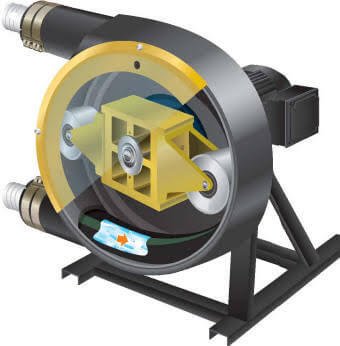
Certain industrial applications require fluid transfer capacity that extends well beyond what standard-sized peristaltic pumps can practically achieve, driving demand for large-format peristaltic pump technology engineered specifically to handle substantial flow volumes while maintaining the fundamental advantages, including valve-free operation and reduced contamination risk, that make peristaltic technology attractive across industrial applications.
Applications Requiring High-Volume Peristaltic Capacity
Large-scale water and wastewater treatment facilities, substantial chemical processing operations, and certain mining and mineral processing applications often require fluid transfer capacity considerably beyond standard peristaltic pump ranges, creating demand for large-format pump engineering capable of achieving this higher throughput while retaining the operational advantages that make peristaltic technology preferable to alternative pump types for these specific application contexts.
Engineering Challenges in Scaling Peristaltic Technology
Developing an effective large peristaltic pump requires addressing engineering challenges that don’t arise, or arise far less significantly, at smaller pump scale, including substantially increased mechanical force requirements for hose or tube compression, correspondingly more powerful motor and drive system specifications, and structural engineering capable of withstanding the considerably greater mechanical stress that high-volume continuous operation places on the pump assembly.
Hose and Tubing Considerations at Large Scale
Large peristaltic pumps typically utilize substantially larger diameter hose or tubing compared to standard-sized pumps, introducing considerations around hose material durability, replacement logistics given the larger physical size and weight of these wear components, and the practical handling requirements involved in periodic hose replacement for large-format industrial pump systems.
Power Requirements and Electrical Infrastructure Considerations
Large-format industrial pumps typically require substantial electrical power supply, making power infrastructure compatibility an important consideration during facility planning, since these pumps often demand electrical service capacity considerably beyond what standard facility electrical infrastructure might otherwise accommodate without specific planning for this equipment’s power requirements.
Structural and Installation Considerations
Given their substantial size and weight, large peristaltic pumps require appropriate structural foundation and installation planning, including adequate support structure capable of handling the pump’s operational weight and any vibration generated during continuous high-volume operation, making installation planning a more involved consideration compared to smaller, more easily relocated pump equipment.
Maintenance Planning for Large-Scale Equipment
Large peristaltic pump maintenance, particularly hose or tube replacement, typically requires more substantial planning and potentially specialized equipment or personnel compared to smaller pump maintenance, given the physical size and weight of large-format wear components, making maintenance procedure planning an important consideration during initial equipment selection and facility integration planning.
See also: How Custom Marble Temples Are Designed to Complement Modern Homes
Evaluating Manufacturers for Large-Scale Pump Engineering
Buyers requiring large-format peristaltic pump capacity should specifically evaluate manufacturer experience and documented performance data with comparable large-scale installations, since this represents a distinct engineering category requiring specific expertise beyond standard industrial pump manufacturing capability alone.
Conclusion
Large peristaltic pump technology addresses genuine high-volume industrial fluid transfer requirements while preserving the fundamental operational advantages that make peristaltic technology attractive across demanding applications. Buyers requiring this substantial pump capacity should carefully evaluate manufacturer experience with comparable large-scale installations and plan appropriately for the power, structural, and maintenance considerations this equipment category presents.
FAQs
Q1: What applications typically require large-format peristaltic pump capacity? Large-scale water and wastewater treatment facilities, substantial chemical processing operations, and certain mining or mineral processing applications commonly require this higher throughput capacity.
Q2: What power infrastructure considerations apply to large peristaltic pumps? These pumps often require substantial electrical service capacity, making power infrastructure compatibility an important facility planning consideration beyond what standard electrical setups might accommodate.
Q3: How does maintenance planning differ for large-format industrial pumps? Hose or tube replacement typically requires more substantial planning and potentially specialized equipment given the physical size and weight of large-format wear components compared to smaller pumps.
